We spent some time in this beautiful place last weekend. Our friends live right next door to Blandy Farm, the State Arboretum of Virginia. In addition to great companionship, and delicious food, we were introduced to a array of farm animals, historic buildings, and unusual trees and plants. The grove of ginkgo trees across the field from their house is most alluring. I hope to return soon.
Wednesday, September 21, 2011
blandy farm
We spent some time in this beautiful place last weekend. Our friends live right next door to Blandy Farm, the State Arboretum of Virginia. In addition to great companionship, and delicious food, we were introduced to a array of farm animals, historic buildings, and unusual trees and plants. The grove of ginkgo trees across the field from their house is most alluring. I hope to return soon.
Friday, September 16, 2011
weekly bundles no. 3
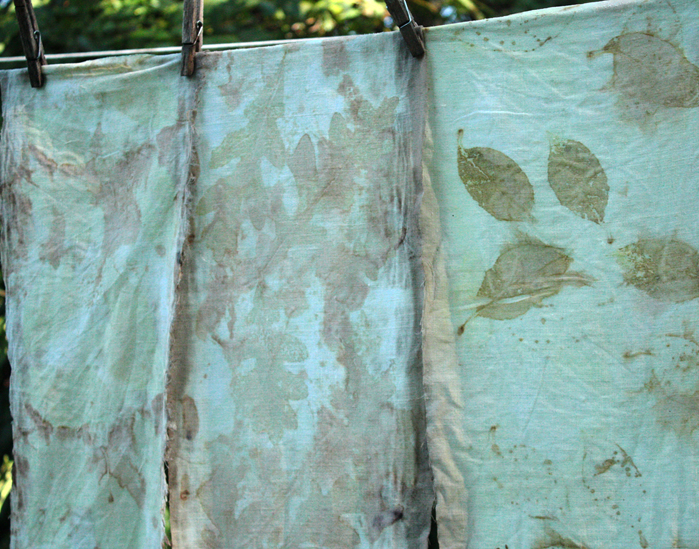
Bleak and blurry was what I got. Bold and boisterous was what I wanted. I prepared an iron pot full of rain water after all our storms, added some more iron scraps, and in went the bundles, linen fabric filled with fennel, dog wood, bishops weed, white oak, linden, roses, and walnuts. Everything simmered for about two hours and was left to cool in the brew overnight, except the paper stack which was removed after an hour. While unbundling the next morning almost everything came out muddled and pale, orangy and splotchy.
rose on paper
oak on linen
oak and something yet to be identified on linen
walnut on linen
I may sound a bit disappointed, but that is not quite true. I never get truly disappointed when unveiling bundles. I think I did not wrap them tight enough this time, and maybe the lack of our chemical laden tap water made things more bland. But honestly, I adore the faint rose leaf impressions on the paper and the impressionistic qualities of the large oak leaves. And then there was the walnut. There is rarely anything disappointing about the walnut.
Wednesday, September 14, 2011
all done
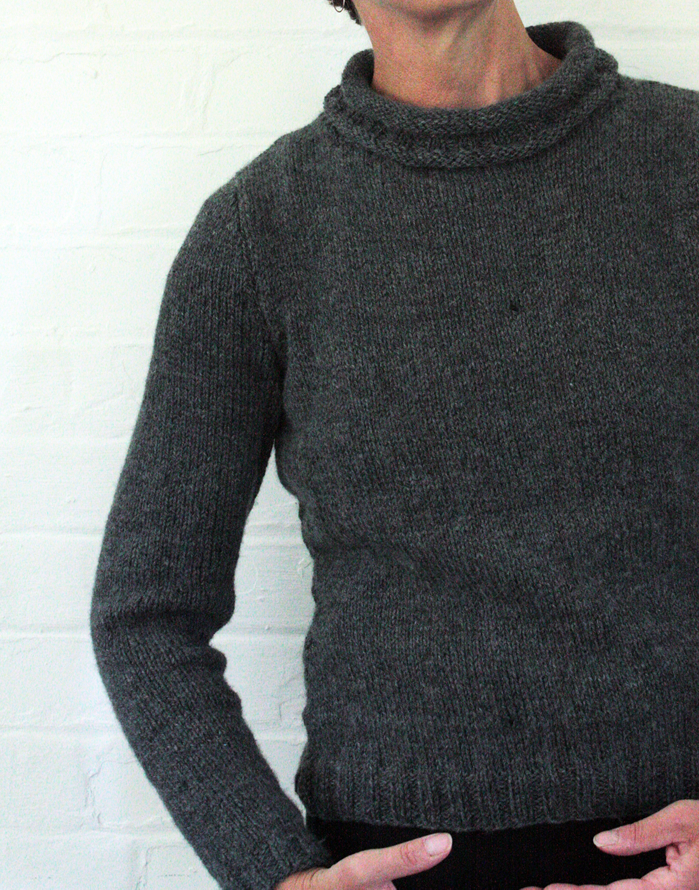
Remember this, almost exactly a year ago? Well it is all done, just in time for cooler weather. This is my first completed knitting project in over 20 years. I am bursting with pride. I love the design of this sweater. It is simple, the wool is exceptionally soft, and the color is perfect. The roll neck is fun, and there is this little fleck of pure black in the yarn on the front that exemplifies the imperfection of hand craft. The only problem is that it is about 1/2 size to small. Just slightly too short, and a bit snug over the shoulders. It will not prevent me from wearing it, but I will be more careful with measurements in the future (all you knitting experts out there, feel free to jump in at any time...)
Clothing, fashion, and the way we dress ourselves is on my mind. I am in the midst of India Flint's book Second skin which offers plenty of wisdom. I also recently learned about Rebecca Burgess' Fibershed a wonderful project that highlights the need for more thoughtful local textile production (via Kathryn Clark's beutiful blog). Then there are creative companies like Alabama Chanin and Imogene + Willie, who strive to produce their beautiful clothing with local labor and materials. But they are the exception and not the norm. I wish there was a realistic way to commit to wearing only domestic and hand crafted clothes. I will ponder this and return to the subject, I promise. For now I think this lovingly hand knitted sweater is a good start.
Friday, September 9, 2011
weekly bundles no. 2
This past week I concentrated on sample dyeing, but was able to fit in one bundle with fern fronds carefully collected during a morning dog walk. The fern prints are delicate and bright green on the habotai silk. My small copper pieces went into the pot again, but no other mordants were used.
The dye samples are for the upcoming workshop. They turned out nice, with two dips each in the dye bath and the alum mordant. Promising.
tansy flowers on linen
sumac leaves on linen
artemisia leaves on linen
hops leaves and flowers on linen
calendula flowers on linen
Tuesday, September 6, 2011
teaching
Next month I will teach my first workshop, which leaves me feeling both rattled and excited. I was asked to do a two hour class on natural dyes as part of a short course called Gardening with Mr. Jefferson: Sustaining an independent nation with useful plants, offered to University of Virginia students. The course will take place at Thomas Jefferson Demonstration Garden and will cover a range of topics such as plant-based textiles and dyes, year around gardening, and sustainable growing and living.
We will create a few small dyed samples in the workshop (two hours is not a long time in the natural dye world) and the colors will be extracted from plants growing in the demonstration garden. I have experimented with tansy, hops, sumac, and artemisia, so far. All with beautiful results in their own right. It will be hard to choose which ones to finally include in the class.
This will be my first teaching experience, if you don't count assisting in my son's third grade art class. I have some basic knowledge about dyeing with plants by now, but I am no expert by any means. For me natural dyeing is about achieving something beautiful by using natural resources at hand, and to appreciate the loveliness in subtleties and imperfections. These are values I learned from my teachers, India Flint, and Rowland Ricketts, and I hope I can pass some of the same ideas along to my students.
Thursday, September 1, 2011
weekly bundles
I am starting something new here to further my love of eco printing and dyeing. Once a week I will make a set of bundles or a natural dye bath, just to experiment and test my wings. I am not good at logging and scientifically charting my experiments, so by sharing them here as they happen I hope to have a record of sorts to refer back to. I also hope to link back to the bundle post once I finish a project that uses the dyed cloth.
This week I collected peach and plum leaves from my garden, and picked up pecan leaflets left on the ground after our mild encounter with Irene. I threw some vitex, japanese maple, and walnut in the mix as well. I used regular (or in our case not so regular) tap water, and I put 2 small pieces of copper piping in the brew. The bundles simmered for about 1 hour, was left to cool in the bath overnight, and then laid on paper to drain. They were unveiled the following morning. The silk and wool prints turned out spectacular, the cellulose fabrics did not do so well.
pecan on linen
pecan on silk organza
pecan and walnut on wool
t-shirt overprinted with vitex
peach on silk
Subscribe to:
Posts (Atom)